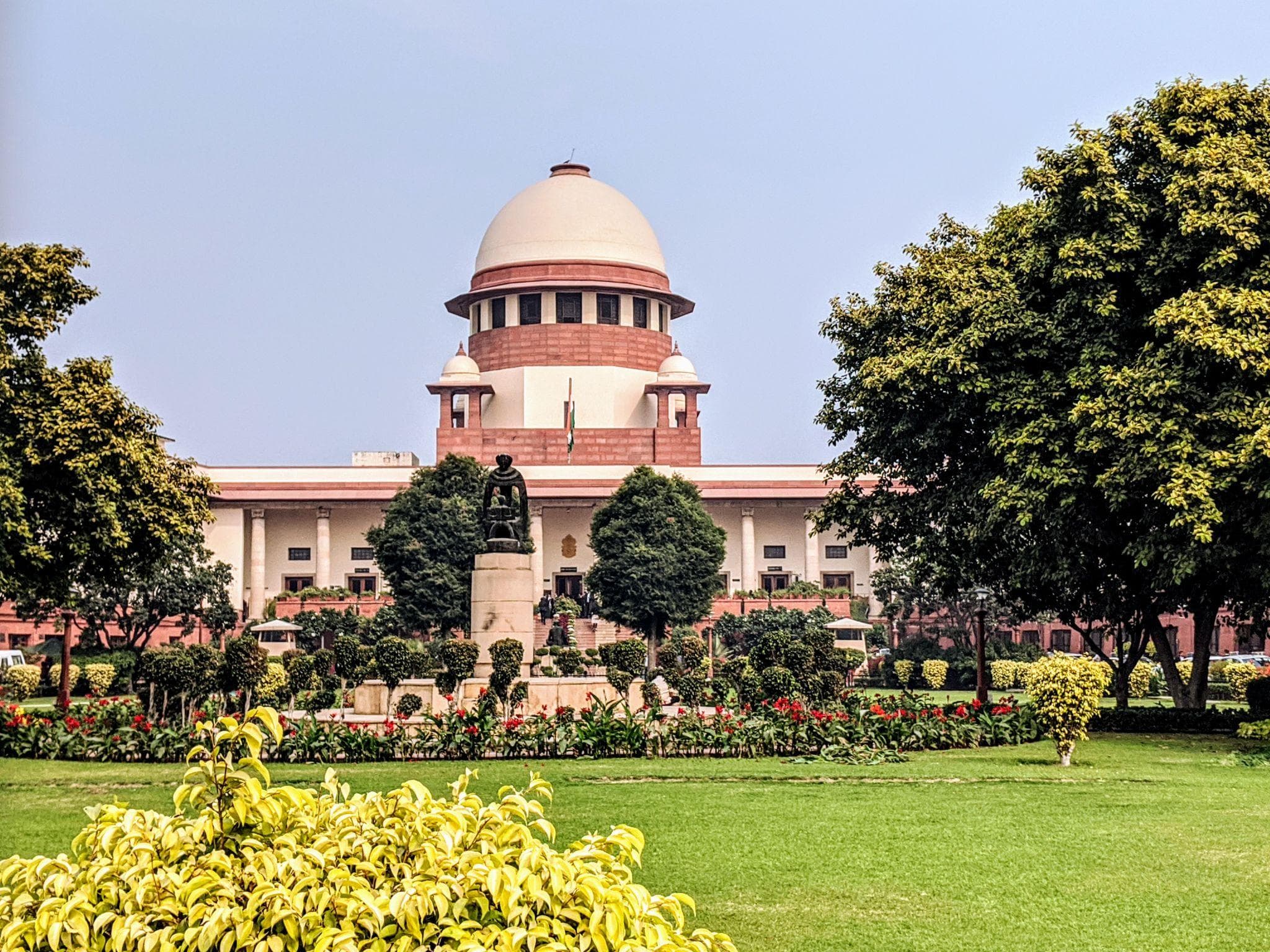
Bachan Singh v. State of Punjab (1980 2 SCC 684; AIR 1980 SC 898) is a landmark judgment of the Supreme Court of India delivered on 9 May 1980. A five-judge Constitution Bench upheld the constitutional validity of the death penalty under Section 302 of the Indian Penal Code while introducing the “rarest of rare” doctrine that continues to govern capital sentencing in India.
Key facts
Court: Supreme Court of India (Constitution Bench)
Bench: Y. V. Chandrachud C.J., A. C. Gupta, N. L. Untwalia, P. N. Bhagwati (dissenting), R. S. Sarkaria J.
Date of judgment: 9 May 1980
Citation: (1980) 2 SCC 684; AIR 1980 SC 898
Core holding: Death penalty valid but to be imposed only in the “rarest of rare” cases
Background
Bachan Singh, previously convicted of murdering his wife and sentenced to life imprisonment, was released after serving his term. In 1977 he killed three members of his cousin Hukam Singh’s family while they slept, and severely injured a fourth. The trial court sentenced him to death under Section 302 IPC; the Punjab and Haryana High Court confirmed the sentence. On special leave, the Supreme Court examined whether capital punishment itself violated Articles 14, 19 and 21 of the Constitution of India and whether Section 354(3) of the Code of Criminal Procedure, 1973 provided adequate safeguards.
Issues before the Court
Is the death penalty under Section 302 IPC unconstitutional as violating fundamental rights?
Does the sentencing procedure in Section 354(3) CrPC (“special reasons” for death) prevent arbitrary imposition?
What principles should guide the choice between death and life imprisonment?
Judgment and reasoning
By 4:1 majority, the Court upheld the validity of the death penalty. It ruled that Articles 14 and 21 are not infringed when deprivation of life occurs “according to procedure established by law.” Section 354(3) was seen as a sufficient procedural safeguard, making life imprisonment the rule and death the exception. The Court formulated the “rarest of rare” test—capital punishment may be imposed only when life imprisonment would be wholly inadequate and when both aggravating and mitigating circumstances, including the offender’s background and the crime’s brutality, are weighed. Justice Bhagwati’s dissent argued that the penalty was unconstitutional for being arbitrary and violative of human dignity.
Impact and legacy


4
The decision became the cornerstone of Indian death-penalty jurisprudence. Subsequent rulings such as Machhi Singh v. State of Punjab elaborated the doctrine’s contours. “Rarest of rare” continues to guide sentencing, requiring individualized assessment and “special reasons” before confirming a death sentence, thereby balancing retributive justice with the constitutional value of life.